Animals in the afterlife
Animal Souls: A Rationale
This page will not
attempt to discuss the issue from the point of view of organised
religions. If we were firmly convinced of the rightness of one
religious view, and then we were to adopt it as our basis of argument,
all those people of other faiths would reject it as biased, unbalanced,
etc. So instead, we will not even touch on the views of organised
religions here. That subject is covered on our "Views of world religions"
page.
On this page we will
attempt to use rational argument and leave organised religion aside.
Indeed, some people are rationally convinced of the existence of the
afterlife, without feeling the need to belong to any religion, or even to
believe in some deity. The issue of whether animals have souls is,
therefore, not a question which is limited to those with religious views.
It is an issue in its own right, whatever your religion, or lack of it. It
needs to be discussed.
So let us just look at the issue of animals having souls rationally for
now...
Either you accept
that we live on after physical death, or you do not. If you don't
accept the idea, despite the evidence given on this site and in the
substantial "Further Reading" section, then there is no point in
staying on this site. We wish you a happy earthly life, if you think
that's all....
If you do think
physical death is not the end, or at least open to the idea, then what
about animals having souls? If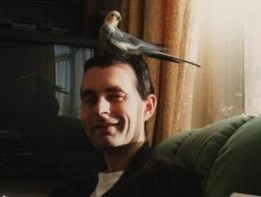 you think that people have souls, then apart from arguments from a
particular religion (which we are excluding for the moment), what
grounds are there to suppose that animals are any different from
people? We all breathe air (or water), we all need to eat, we all
reproduce, we all move about. Desire and will can be observed in most,
if not all, animals - e.g. a dog wishing to go out, a cat wanting to
sit on someone's lap. Emotions can similarly be often observed - e.g.
pleasure (purring), protectiveness (barking at visitors), fear (sheep
seeing a predator) and of course love (licking an "owner" without a
motive such as wanting food). Intelligence is also often noted in
animals - e.g. making associations between events/concepts. Dogs, cats,
birds and pigs have all been used in intelligence tests; all have been
found capable of making multiple sequence choices, not some simple
"touch the button for a treat" exercise! Further, brain scans have
shown that some animals, especially monkeys, show brain activity
remarkably similar with that of humans. Some apes are able to make
multiple associations and logical sequence choices.
you think that people have souls, then apart from arguments from a
particular religion (which we are excluding for the moment), what
grounds are there to suppose that animals are any different from
people? We all breathe air (or water), we all need to eat, we all
reproduce, we all move about. Desire and will can be observed in most,
if not all, animals - e.g. a dog wishing to go out, a cat wanting to
sit on someone's lap. Emotions can similarly be often observed - e.g.
pleasure (purring), protectiveness (barking at visitors), fear (sheep
seeing a predator) and of course love (licking an "owner" without a
motive such as wanting food). Intelligence is also often noted in
animals - e.g. making associations between events/concepts. Dogs, cats,
birds and pigs have all been used in intelligence tests; all have been
found capable of making multiple sequence choices, not some simple
"touch the button for a treat" exercise! Further, brain scans have
shown that some animals, especially monkeys, show brain activity
remarkably similar with that of humans. Some apes are able to make
multiple associations and logical sequence choices.
There is a lot of hard research evidence about animals having
intelligence and the ability to feel a wide range of emotions; there are some good links at the bottom of this page. Further, many prominent scientists have reached the decision that animal consciousness
is on a comparable level to that of humans. In 2012, 71 scientists met at
Cambridge University and signed the "Cambridge Declaration on Consciousness". Here is the final part: "...the
weight of evidence indicates that humans are not unique in possessing the
neurological substrates that generate consciousness. Non-human animals,
including all mammals and birds, and many other creatures, including
octopuses, also possess these neurological substrates."
.jpg)
Of course, the above quote is about having consciousness, not a soul. But
consciousness is generally regarded as the essential element in the
concept of a soul, ever since the days of Plato in ancient Greece! The
idea that humans are "unique" and the only ones capable of
awareness is, as shown above by the above declaration, scientifically
untenable.
Some people closely associate the idea of souls and the afterlife with religion, but this does not have to be the case. Indeed, some atheists hold that our lives continue in some form after physical death - e.g. Sea Kimbrell. We will not get into the rights or wrongs of religions, as it would take us beyond the scope of this website. Whether you believe in one particular religion, religion generally, or no religion, is your private affair. The issue of animal souls in the afterlife is a separate question.
If you are open to the idea that the soul (and the afterlife) exists - and I assume that is the case, if you are still reading this page - then animals surely have a place in the afterlife!
In that case, there are important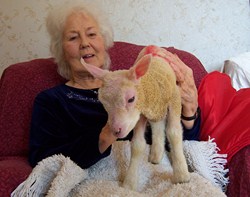 implications for how we regard them and treat them. Instead of
regarding animals as "things" to be used as we wish, as tools, we
should regard them as fellow occupants of this universe, with their own
rights to life and freedom. The level of spiritual development is of
little consequence. Any living being deserves respect, as an entity
having its own soul. This in turn raises issues such as, "Do we have
the right to kill animals for food?" We shall leave you ponder that
question, as it would take us beyond the scope of this site.
implications for how we regard them and treat them. Instead of
regarding animals as "things" to be used as we wish, as tools, we
should regard them as fellow occupants of this universe, with their own
rights to life and freedom. The level of spiritual development is of
little consequence. Any living being deserves respect, as an entity
having its own soul. This in turn raises issues such as, "Do we have
the right to kill animals for food?" We shall leave you ponder that
question, as it would take us beyond the scope of this site.
What about pets on the astral?
Just a brief word
for those who may have had a beloved companion animal (a better expression than "pet") which has died physically. Be
assured that your companion is alive, well and happy on the astral. You can
and will be united when you, in your turn, go to the astral. Your companion
is "waiting" for you - although "waiting" really does not mean
anything, as the astral is not time dependent. If you pass over in
another thirty, forty, fifty years, your companion will welcome you as if you
had just come back from a short visit to the shops...
In the vast majority
of cases, a companion animal will happily adjust to life in the astral, building its
own lifestyle there, in the company of others of its kind, or of humans
who have passed over.
However, in cases of
an exceptional love between a pet and its beloved human, a companion animal can visit the
physical world. Because this requires the animal attaining knowledge and
spiritual awareness at a higher level than s/he had on the physical,
this needs specialist training. Fortunately, such training is available
on the astral, where the animal's' love and determination to visit his/her
caretaker are exceptionally strong. It must be stressed, however, that
this is not the norm; most animals are content to wait happily for their
caretakers to join them - in what seems to them like the "winking of an
eye". This is no different than happens with humans.
Some useful web pages well worth researching:
"Psychology Today" article about whether there are dogs in heaven
12 touching stories that show animals have souls
10 amazing facts about animal intelligence
Research into telepathy between animals and humans
30 most intelligent animals (Sentient Science)
Crows show special skills
Atheists in the Afterlife